

Popular

- Manage License (Add on)
- Bulk Revoke
- Generating Access Code
- Direct Distribution (Add On)
- Creating Single User or Multiple Users (Bulk Upload)
- Admin Center and Profile and Settings
- Revoking Content
- Distributing Content
- Signing in to Kitaboo
- Promote User/Transfer
- Create Class/Update Class
- Selective Oneroster Sync with API/ZIP/SFTP

- Order & Reader Launch API Guide
- Customer Order Details -View Order
- License Management
- Analytics Dashboard and Reports Overview
- How Kitaboo Reader – Text-to-Speech (TTS) Works
- Activated User – Definition & Billing Policy
- What is Sequential Learning and How to Enable It? (Add On)
- Understanding User Roles: Producer vs. Admin
- How to Add External LTI Link (Add-On)
- Auto Book Deletion Process
- Adding group with SAML
- Syncing Data with Clever
- Selective Oneroster Sync with API/ZIP/SFTP
- Syncing Data with PowerSchool
- Syncing Data with OneRoster
- Adding a Group
- Searching a Customer
- Issuing Licenses
- Editing a Customer
- Deactivating a Customer
- Adding a Google Classroom Customer
- Adding a OneRoster Customer
- Adding One roster 1.2
- Adding a LTI 1.3 Customer with OneRoster
- Adding a LTI 1.3 Customer
- Adding an LTI 1.1 Customer with OneRoster
- Adding LTI 1.1 Customers
- Sorting Customer and Group
- Creating a Collection
- Enable K-AI at the content level
- Content Lifecycle Stages in Kitaboo for eBooks
- Creating a Fixed-layout Kitaboo eBooks
- Creating Fixed-layout ePub 3.0
- Upload 3rd Party ePub 2.0/3.0
- Creating a Course or Uploading Scorm
- Activity or Gradable Activity Creation
- Authoring an ePub
- Creating a Video Book
- Creating an Audio Book
- Updating the Cover Image
- How to Update Title Metadata (Editing)
- Deleting and Deactivating Content
- Users Tab
- How to Edit and Delete a Category
- Clever Integration
- Classlink Integration
- Canvas LTI Integration
- Admin Center
- Analytics Tab
- Adding a Customer
- Creating Admin Accounts
- Development Process
We follow an Agile development methodology with 2-week sprint cycles. Our product team maintains a rolling roadmap that balances three input streams: platform improvements driven by our own product vision, client-requested features validated across multiple accounts, and technology/compliance updates driven by external changes (browser updates, OS releases, accessibility standards, data privacy regulations).
- Release Cadence
We ship platform updates on a regular cycle — typically monthly for feature releases and more frequently for bug fixes and security patches. Major version upgrades (e.g., Reader 6.0) follow a planned release schedule with advance communication to all clients. Updates are deployed server-side for the web reader (no action required from you) and via App Store / Play Store updates for mobile apps.
- How We React to Technology Changes
Some recent examples of how we’ve responded to external changes:
– Browser changes: When browsers deprecated certain APIs or changed security policies, our web reader was updated within the same release cycle to maintain compatibility across Chrome, Safari, Firefox, and Edge.
– OS updates: Each major iOS and Android release is tested pre-launch (during beta) and our apps are updated to ensure compatibility on or before the public release date.
– Accessibility standards: Kitaboo moved from WCAG 2.1 to WCAG 2.2 AA alignment proactively, not reactively — we track W3C working drafts and plan ahead.
– Security and compliance: Security patches are applied as part of regular maintenance. When new data privacy regulations emerge (state-level student data laws, GDPR updates), our compliance and engineering teams assess impact and implement changes within the required timelines.
– AI and emerging tech: K.AI (our in-reader AI layer for quiz generation, summaries, and flashcards) is an example of a technology addition driven by market demand — built as a modular add-on so clients can enable it when ready.
- How Client Input Feeds the Roadmap
Feature requests from clients are logged, evaluated for cross-client demand, and prioritised against the roadmap. Features requested by multiple clients get elevated priority. We do not build one-off customisations as product features — if a request benefits the broader platform, it enters the roadmap; if it’s unique to one client, we scope it as a custom engagement separately.
- Communication
Clients receive advance notification of upcoming features and changes through release notes and their account manager. Breaking changes or major updates include a transition window with documentation and support.
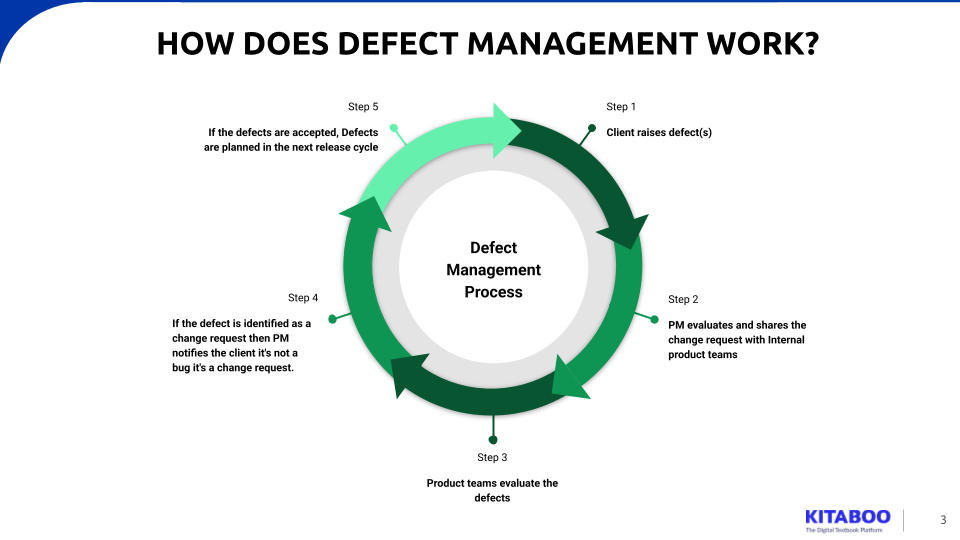
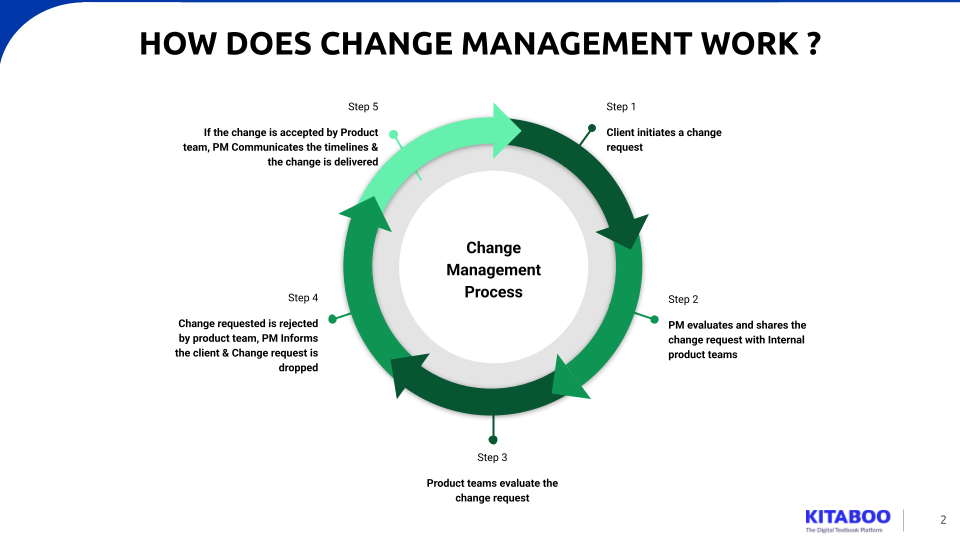
For deprecated features, a notice is typically sent at least 3 months in advance. While we strive to maintain backward compatibility wherever possible, certain features may need to be deprecated due to security concerns or low usage.